
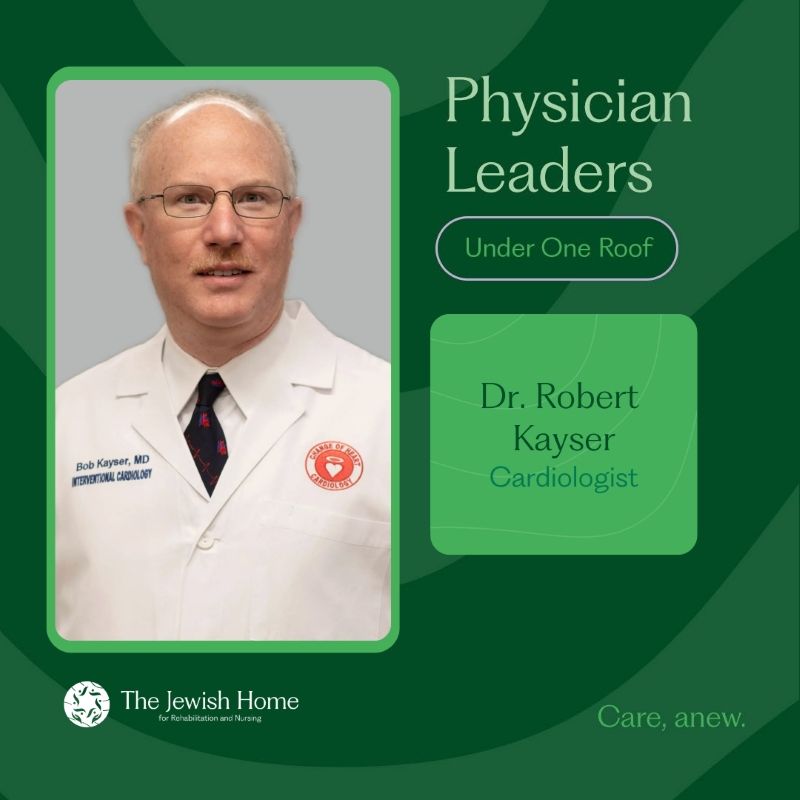
In recognition of World Heart Day on September 29, 2026, The Jewish Home for Rehabilitation & Nursing in Freehold, New Jersey, spoke with Robert Kayser Jr., MD, MBA, FACC, FSCAI, an interventional cardiologist and director of cardiology. In this edition of Ask the Expert, Dr. Kayser answers common questions about heart health for older adults, from preventing heart disease and recognizing potential signs of heart failure to recovering after hospitalization and understanding the importance of cardiac rehabilitation. His practical guidance can help older adults and their families make informed decisions and take a more active role in cardiovascular health.
1. Dr. Kayser, what is the most important thing adults over 65 should know about preventing heart disease and heart failure?
The most important thing is lifestyle.
As with any age, lifestyle plays a major role in cardiovascular risk. Eat a heart-healthy diet rich in vegetables and lean meats, such as chicken and fish. Exercise on a regular basis, even if all you do is go for a daily brisk 20-minute walk. Be an appropriate weight (neither too thin nor too fat). Don’t smoke or if you do quit.
2. Shortness of breath, swelling in the legs, and unusual fatigue can sometimes be dismissed as part of getting older. When should these symptoms raise concern about heart failure?
Any time these symptoms are new or worsening, you should have them evaluated in a timely manner. Even if they are longstanding, these symptoms should be checked out.
3. After a heart attack, cardiac procedure, or hospitalization for heart failure, why is the rehabilitation period so important to a patient’s long-term recovery?
Studies have shown that cardiac rehabilitation after a cardiac event or procedure can result in better long-term functional status, reduce the chance of another event, and may even help you live longer.
4. What can patients and families do after discharge from the hospital to reduce the risk of returning because of a heart-related condition?
- Have a follow-up visit with your cardiologist within one or two weeks after discharge.
- Monitor your weight and blood pressure daily, and notify your physician of any changes.
- Make sure you understand what medications you are being discharged with and how/when to properly take them. The medication list you receive at discharge is very likely not the same as the one you had at home before your hospital admission. This new list may be complex and confusing. If you have any questions or confusion at all ASK YOUR PHYSICIAN or NURSE to explain.
5. Blood pressure, weight, cholesterol, and heart rate are all important. Which numbers should older adults pay the closest attention to, and why?
It’s important to understand that numbers only tell part of the story. How you are feeling is probably more important. You shouldn’t become obsessed with these biometric numbers to the exclusion of living your life, but if you track anything regularly, blood pressure is probably the most important number to monitor at home.
Of course, your physician should also keep an eye on your cholesterol levels and weight, but this should all be part of a comprehensive cardiovascular prevention strategy.
If you have a history of congestive heart failure, the main number to track besides your blood pressure is your weight. Weight gain is often the first indication that heart failure may be worsening, and intervention at this stage can help prevent another hospital admission.
6. How much of a difference can relatively small changes in diet, activity, and daily habits make for someone who already has cardiovascular disease?
Several studies have shown that adding just a few hundred steps to your total daily count can result in dramatic reductions in cardiovascular events. Even a five-minute daily walk has been shown to reduce events compared with not walking at all.
Additionally, a low-calorie diet based on vegetables, fruits, chicken, fish, and olive oil, similar to a Mediterranean-style diet, has been shown to reduce cardiac events compared with a standard American diet. Try to limit your intake of processed foods and sugar-sweetened drinks. Limit alcohol intake to one or two drinks per day. Interestingly, two or three cups of black coffee per day have also been associated with a reduction in cardiac events.
In the end, everything except smoking should be enjoyed in moderation.
Dr. Kayser, if you could give our residents, families, and the greater Freehold community one piece of advice this World Heart Day, what would it be?
EAT LESS, and DO MORE!